

Volume Control Home review
 Analysis by GetAllApps
I can see why Volume Control Home would catch my attention in the first few days: it promises a more convenient way to deal with a familiar annoyance, media that feels too quiet even when the phone’s ordinary volume is already at its limit. The appeal is straightforward, but an app that changes sound levels has to earn trust as well as offer convenience. I would judge it less by the initial novelty of making audio louder and more by whether it becomes a useful, predictable part of my routine.
From first-week curiosity to a useful habit
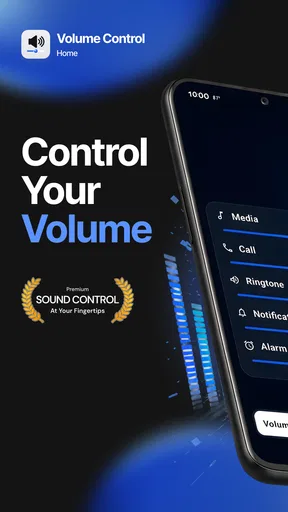
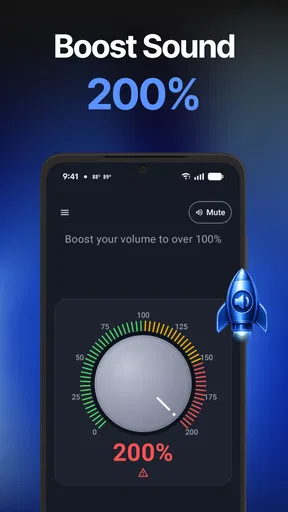
Volume Control Home is a free Android music-and-audio app from Utility Apps Home. Its central idea is to give you a way to push media volume beyond the usual 100% ceiling and reach sound controls from the home screen. That makes it different from a music player: it is intended to affect how loud media sounds, rather than organize or play your library.
In the first week, the clearest test is a quiet recording or a video whose dialogue is hard to hear at a comfortable phone volume. I would try it first with spoken audio, then with music, and compare the result at the same listening position. This is more useful than immediately turning everything up: a louder signal can make quiet passages easier to hear, but it can also make already-loud parts harsh or uncomfortable.
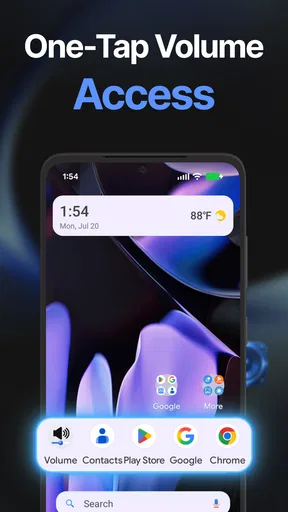
The home-screen angle matters most when you adjust volume often. Instead of repeatedly opening a sound settings page, you can reach the app’s controls from the place where you already launch other tasks. For a person who switches between podcasts, clips, and music throughout the day, fewer steps can make the feature feel practical rather than merely interesting.
My first-week advice is to begin with a modest increase and listen for distortion, not just loudness. Phone speakers are small, and pushing them harder cannot restore detail that a recording lacks. If a voice becomes rough, or music loses balance, lowering the boost is usually wiser than treating maximum output as the goal. The useful setting is the one that improves audibility without making the sound tiring.
The app is rated for Everyone, so its intended audience is broad. That does not mean every listening situation is equally suitable. I would be cautious about using extra volume through headphones, particularly in noisy surroundings where it is tempting to keep increasing the level. For a quiet room or a brief spoken clip, a small adjustment may be enough; for prolonged listening, comfort and hearing safety should come first.
What the convenience changes in everyday use
A realistic example is catching a short instructional video while cooking. If the phone is on a counter and the speaker is competing with ordinary kitchen noise, a direct home-screen control may save the interruption of digging through settings. I would still position the phone closer before boosting it: improving placement often makes speech clearer without asking the speaker to work as hard.
That distinction is one of the app’s practical trade-offs. Volume Control Home can help when the source is simply too quiet for the moment, but it is not a substitute for a better recording, a closer listening position, or a suitable speaker. If a film’s dialogue is mixed far below its effects, raising overall volume may make both louder rather than fixing the mix. For that situation, a player with dialogue or equalizer controls may be a better fit.
The app has an average rating of 4.4 from around 4.9 thousand ratings, and it has passed 500 thousand installs. Those figures suggest that many people have found the basic idea worthwhile, while still leaving room for different devices and listening preferences to shape the experience. I would treat them as context, not as a promise that boosted audio will sound equally good on every phone.
Does it keep earning a place after the novelty?
After the first few uses, the novelty is likely to fade. The lasting value depends on whether you regularly encounter media that is too quiet and whether the shortcut saves enough effort to become part of your routine. Someone who mostly listens through a well-balanced headset at ordinary levels may rarely need it. Someone who watches clips on a phone speaker or struggles with low-volume recordings could find the control useful several times a week.
A good way to decide is to notice the situations in which you reach for it. If the same kinds of quiet content keep appearing, leave the home-screen access where it is easy to find and use a consistent, restrained adjustment. If you only use the boost once out of curiosity, there may be little reason to keep a dedicated control in your daily setup. The app’s value is about repeated friction removed, not about how dramatic the first increase feels.
Compared with the usual alternatives, the built-in volume buttons are simpler and already available, but they stop at the phone’s normal limit. A media player with its own sound tools can offer more targeted control for one listening app, though that does not necessarily help across different sources. Volume Control Home makes more sense when the problem occurs across the media you use and you want a reachable adjustment rather than a new player or a detailed sound-tuning workflow.
There is a useful exception: if you primarily need clearer speech, an app or device feature designed around speech enhancement may be more appropriate than a general volume boost. Likewise, if your main concern is balancing bass, treble, or different frequency ranges, an equalizer gives more specific control. I would choose this app for access to louder media, not assume it replaces those other tools.
Keeping the controls helpful, not intrusive
The maintenance burden should be judged by how often the control needs attention. A volume tool is most convenient when it works as a quick adjustment rather than becoming another setting to revisit before every video. I would check the chosen level when changing from a quiet podcast to energetic music, because a level that helps one source may be excessive for another. That small habit is more valuable than leaving the boost high by default.
Another practical habit is to test with the speaker and headphones separately. The same adjustment can feel very different through each output, and a level that seems modest from a phone speaker may be too much in headphones. Before playing something in public or handing the phone to someone else, I would bring the volume back down. This avoids an unpleasant surprise and makes the control easier to trust over time.
The current version is 1.6.4, and the app requires Android 9 or later. That makes it a choice for compatible Android users rather than an option for iPhone owners. If you are comparing devices or helping someone else install it, the operating-system requirement is worth checking first; there is no benefit in building a routine around an app the phone cannot run.
Because this is a volume-boosting tool, sound quality is the key maintenance issue even if the interface itself takes little attention. I would listen for crackling, flattened music, or sharp peaks whenever increasing output. If those appear, reduce the level or switch to a better playback setup. The app can change loudness, but it cannot make a tiny speaker reproduce clean, powerful sound beyond its physical limits.
Where fatigue can set in
The main source of fatigue is treating “past the limit” as a setting to use all the time. Louder playback can be initially satisfying, yet prolonged exposure to harsh or overly strong sound can make listening less comfortable. For me, the sensible use is occasional correction for a quiet source, not a permanent replacement for the phone’s normal volume range.
There can also be friction when media sources vary. A podcast, a video, and a music track may not have the same loudness or sound balance, so one adjustment may not suit every item. If you find yourself constantly raising and lowering output, the app may be solving the wrong problem; a player with per-source controls, a different speaker, or simply adjusting the phone’s position could be less annoying.
Finally, a home-screen shortcut is only helpful if it fits the way you use your phone. If you rarely adjust sound or prefer keeping the home screen uncluttered, the shortcut may become visual noise. I would keep it visible only if the quick access saves real effort. That is a small but telling test of whether the app has moved from novelty into a lasting habit.
My long-term verdict
Volume Control Home earns a place for Android users who repeatedly run into quiet media and want a quick way to make it more audible. Its strongest case is not that every recording should be louder; it is that an occasional, controlled boost can make a short video, spoken clip, or low-level recording easier to follow without changing the app used to play it.
I would skip it if your phone already gets loud enough, if you mainly want detailed equalizer adjustments, or if you expect amplification to repair poor recording quality. I would also avoid relying on high output for extended headphone listening. Those are not flaws unique to this app so much as limits of the task it tackles, but they matter when deciding whether it deserves permanent space.
With a 4.4 average and a free price, it is an easy option to try if your device runs Android 9 or later. The developer is Utility Apps Home, and the app’s Everyone age rating makes its intended audience clear. My recommendation is conditional but positive: install it if quiet media is a recurring annoyance, test it gently across the sources you actually use, and keep it only if the home-screen access continues to save time after the first week.
Pros and cons
Pros
- Offers quick access to volume controls from the home screen.
- Can reduce the need to press physical volume buttons.
- Helps adjust sound without opening a full settings menu.
- Useful for phones with hard-to-reach volume buttons.
- May make frequent volume changes more convenient.
Cons
- Home screen access depends on the app's available widget options.
- Some Android versions may restrict background features.
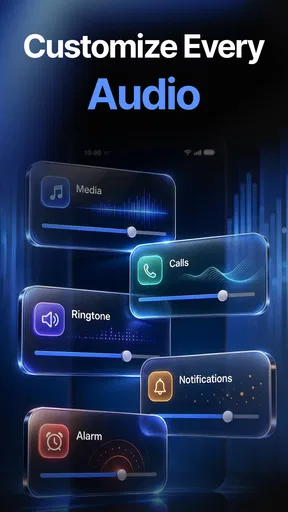
- It may not control every audio stream separately.
- The app may require permissions to apply volume changes.
- System updates can affect compatibility or behavior.


